
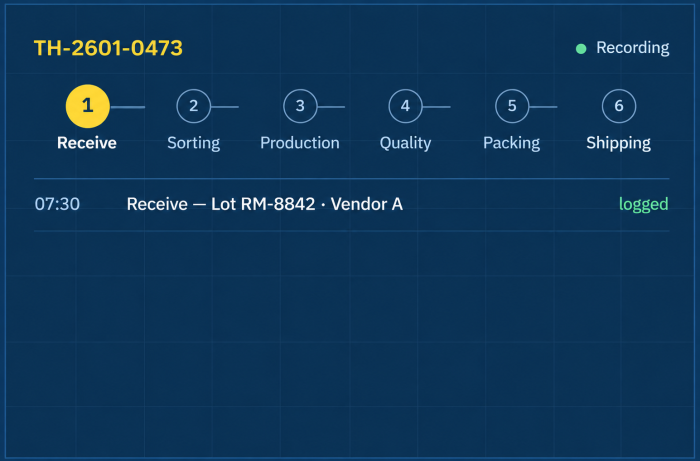
What an MES is
MES is the software that runs and records production from material in to product out — what was made, from which lot, by whom, on which machine, and whether it passed. It sits between ERP and the machines on the floor.
01
What it does
Runs and records every production step, from receiving through QC, packing and shipping.
02
Where it sits
Between the ERP that holds the business plan and the machines and PLCs on the floor.
03
What you get
Traceable per-unit records and one set of numbers every department sees each shift.
A loop, not a month-end report
01
Gather
Pull data from machines, scanners and operators as work happens.
02
Analyze
Compare actual output against the process plan and schedule.
03
Act
Stop bad material, reroute work, alert the line before defects spread.
04
Learn
Feed results back into standards, schedules and maintenance cycles.

Five Core Modules
Start with one or two. Add the rest once the data settles down.
Production
- See what each line is running right now
- Know where every job is, station by station
- Plan work down to the station, not just the day
- Spot idle machines and cut the downtime
Performance
- Measure OEE, and break down how much went to downtime, slow running and defects
- Point out the station that is holding up the whole line
Inventory
- See stock of raw material, parts and finished goods in one place, without a physical count
- Flag a material shortage against the next work order, before the line stops
Traceability
- Trace a finished product back to the material lot, the machine and the operator who built it
- Pull up the full history of any serial number the moment a customer or auditor asks
Quality
- Stop a part that misses the standard before it moves on
- Log every defect and show what keeps causing them
MES sits between your ERP and your machines
Start with one or two. Add the rest once the data settles down.
ERP
Aligns business plans with what is actually running.
PLM
Exchanges product definitions, routings and work instructions.
WMS
Manages material availability and delivery to the line.
Maintenance
Tracks equipment condition and service cycles.
Real system examples
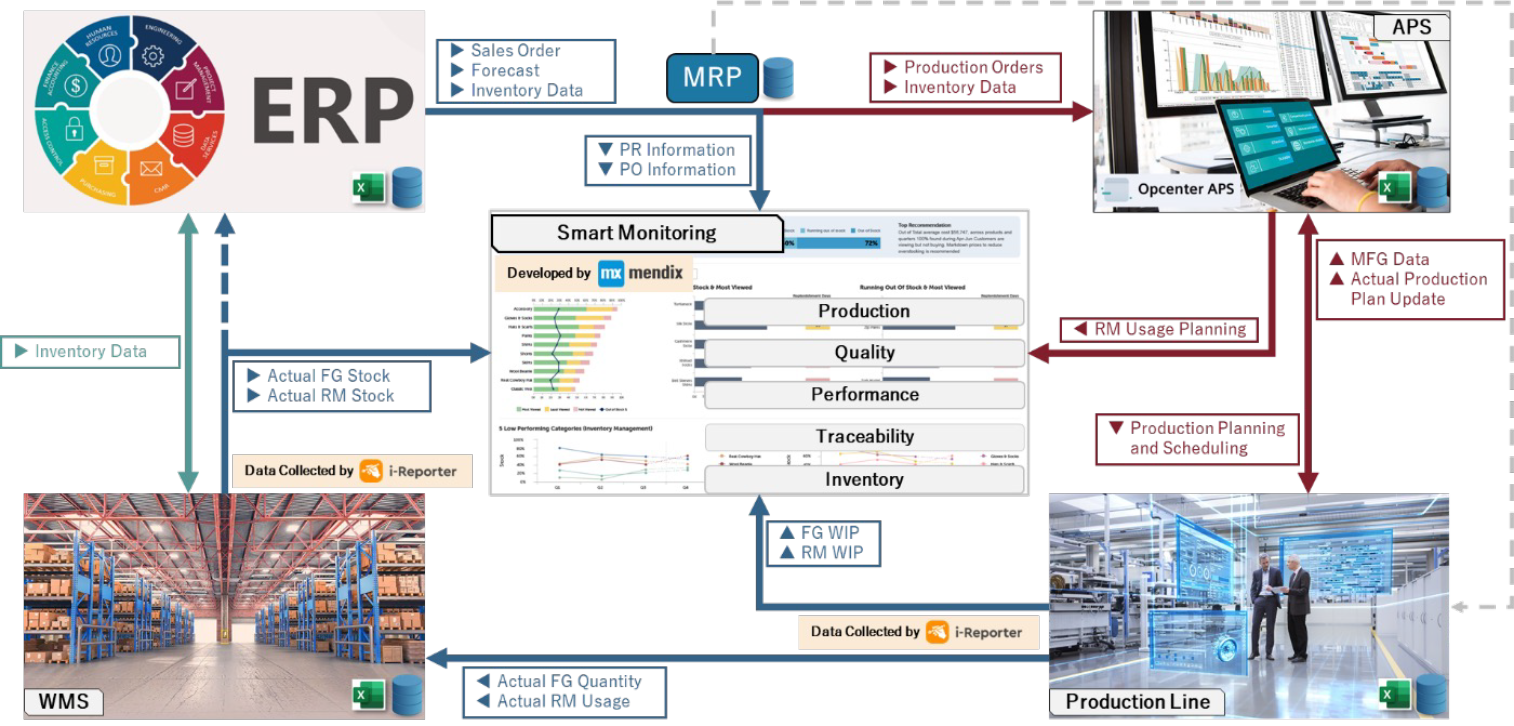
System overview: ERP above, MES modules in the middle, data captured on the floor.
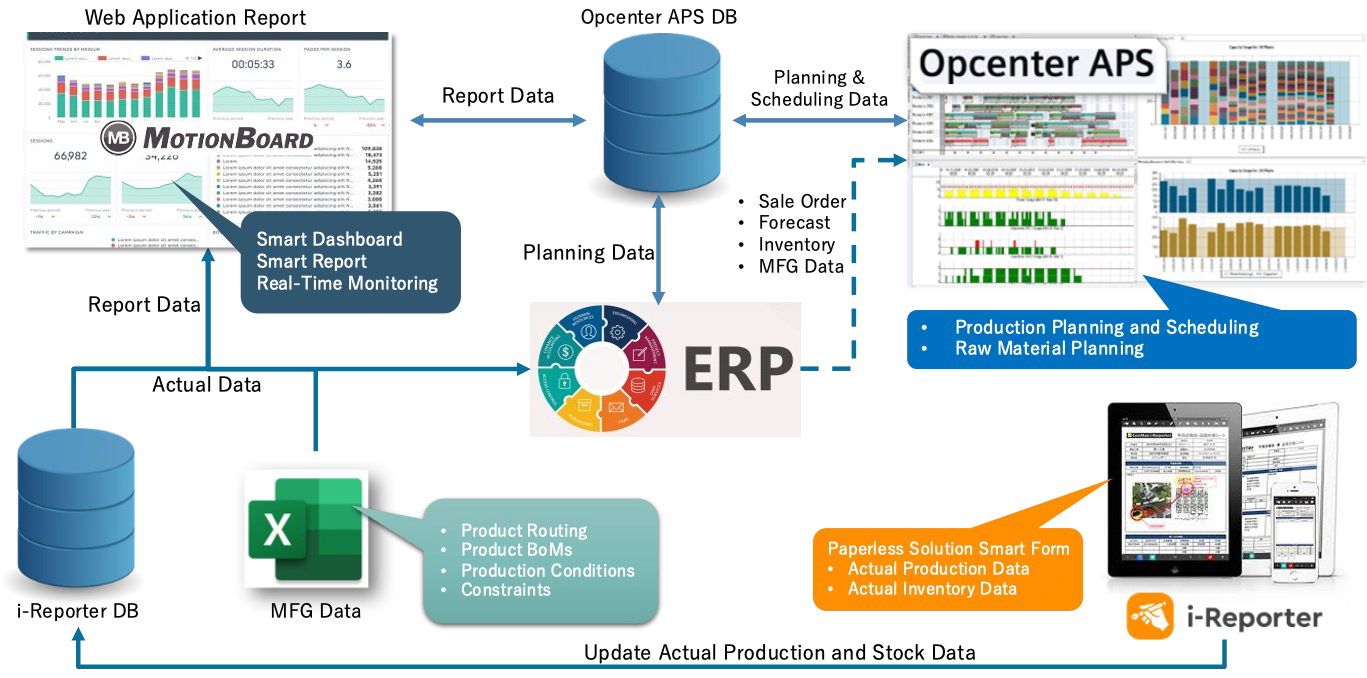
A working configuration: planning, MES database, reporting and mobile data capture.
What changes after go-live
The implementation of a Manufacturing Execution System (MES) in manufacturing operations offers several significant benefits that enhance efficiency, quality, and overall performance. Here are the main advantages:
Late signals
Defects surface after the whole lot is built.
Scattered data
Numbers live in paper, Excel and people’s heads.
Tracing takes days
A customer query means digging through files.
Stock drifts
System and shelf disagree every month.
Manual reports
Hours a week spent assembling numbers.
Paper stacks
Transcription errors and lost records.
Immediate signal
Alerts on the first unit out of spec.
One data set
Every department sees the same number.
Trace in seconds
Type a serial, see the whole history.
Stock matches
Consumption posted automatically.
Reports build themselves
Updated every shift, no assembly.
Paperless
Records captured as the work happens.

