Engineering is No Longer Just About Creating Models
In the past, being a skilled CAD user meant having the ability to create accurate 3D models and engineering drawings quickly and efficiently. Today, however, the product development landscape is evolving rapidly.
Products are becoming increasingly complex, development cycles are getting shorter, and market competition is more intense than ever. As a result, the role of engineers has expanded far beyond simply creating CAD models.
When CAD Becomes More Than a Design Tool
For decades, CAD has been at the core of engineering, supporting the creation of parts, assemblies, and technical drawings.
Today, organizations need more than accurate models. They need digital information that can be leveraged throughout the entire product development lifecycle—from design and simulation to cross-functional collaboration and informed business decision-making.
Who Is a Digital Engineer?
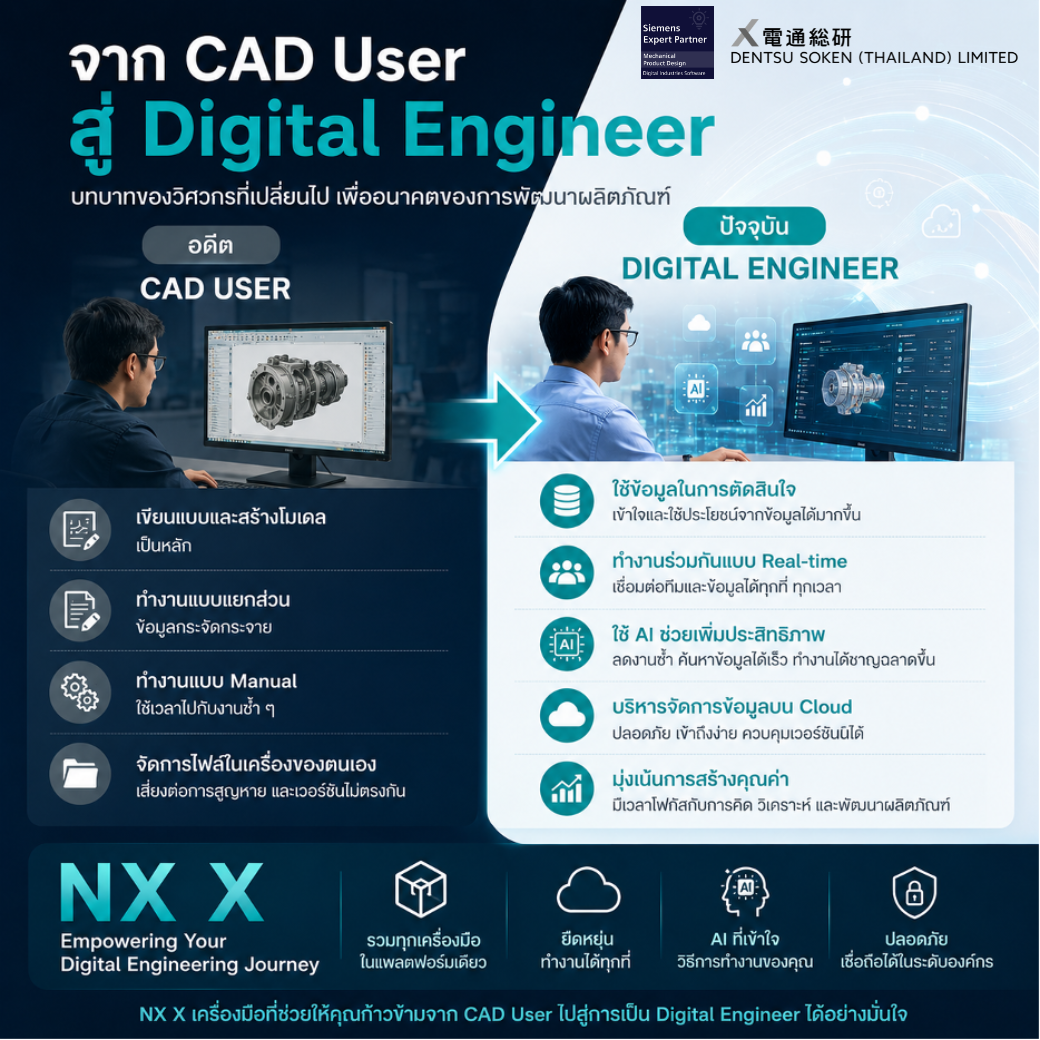
A Digital Engineer is an engineer who effectively uses digital information to enhance engineering processes, improve collaboration, and support smarter decision-making.
In addition to CAD expertise, modern engineers are expected to develop capabilities in:
✔ Data-Driven Engineering
✔ Cross-Functional Collaboration
✔ AI-Assisted Engineering
✔ Data Management and Digital Workflows
The objective is no longer just to create models—it is to create valuable, connected, and reusable engineering data that benefits the entire organization.
AI Is Not Replacing Engineers
Rather than replacing engineers, AI is helping eliminate repetitive and time-consuming tasks, such as:
- Finding relevant commands and engineering information
- Managing large volumes of design data
- Simplifying complex workflows
- Accelerating model editing and design updates
This allows engineers to spend more time solving problems, making informed decisions, and driving innovation.
NX X: Accelerating the Journey to Digital Engineering
NX X makes the transition from CAD User to Digital Engineer easier by bringing together CAD, AI, collaboration, and data management capabilities in a single cloud-native platform.
The future of engineering is not defined solely by how quickly models can be created. It is defined by how effectively engineers leverage digital data and intelligent technologies to deliver greater business value and accelerate innovation.